
Moroccan Gastronomy – A Journey Through the Flavors of Morocco
Experience the Authentic Taste of Morocco
Moroccan cuisine is a feast for the senses — a blend of Berber, Arab, Andalusian, and French influences that tell the story of Morocco’s rich cultural heritage.
From the bustling souks of Marrakech to the quiet kitchens of the Atlas Mountains, every dish is a celebration of flavor, tradition, and hospitality.
At Morocco Travel Bliss, we invite you to discover Morocco through its delicious cuisine — where every bite reveals a part of our history and heart.

Top Moroccan Dishes To Taste
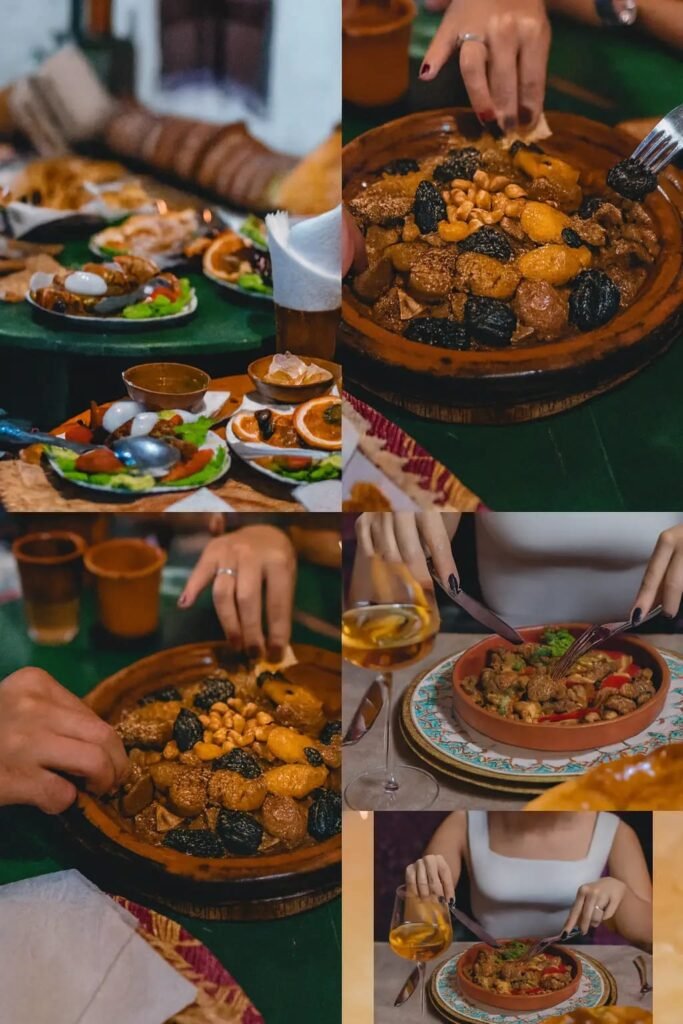
Tagine
The iconic Moroccan slow-cooked stew made in a clay pot. It can be prepared with lamb, chicken, fish, or vegetables, flavored with saffron, cumin, and preserved lemons. A symbol of Moroccan warmth and home cooking.
Couscous
Traditionally served on Fridays, this national dish features steamed semolina grains topped with vegetables, chickpeas, and tender meat or chicken. A celebration of family, unity, and flavor.
Pastilla (Bastilla)
A sweet and savory pie made with layers of crispy pastry filled with shredded chicken or pigeon, almonds, eggs, and cinnamon, dusted with powdered sugar. A royal dish blending sweetness and spice.
Harira
A hearty soup of tomatoes, lentils, chickpeas, and fresh herbs, often served during Ramadan. A comforting symbol of Moroccan hospitality.
Mechoui
Slow-roasted lamb cooked until perfectly tender, often seasoned with cumin and salt, and traditionally enjoyed during celebrations. An authentic taste of Moroccan festivities.
Mint Tea
Known as “Moroccan whiskey,” this refreshing blend of green tea, fresh mint, and sugar is more than a drink—it’s a gesture of friendship and welcome. Served everywhere, from souks to desert camps.

The Essence of Moroccan Cuisine
Culinary Experiences with Morocco Travel Bliss
Ras el Hanout, saffron, cumin, cinnamon, and ginger form the foundation of Moroccan cooking. Their balance creates unforgettable aromas that awaken your soul.
Sweet Meets Savory
Only in Morocco can you taste dishes like lamb with prunes, chicken with preserved lemons, or couscous topped with caramelized onions and raisins.
From the Sea to the Desert
Whether it’s a seafood tagine from Essaouira, a hearty couscous in Fez, or desert bread baked in the sands of Merzouga, every region adds its unique touch.
Bread The Heart of Every Meal
In Morocco, bread — or khobz — is more than food; it’s a way of life. Baked daily in communal ovens or clay furnaces, it accompanies every dish and replaces cutlery. From the round country-style khobz beldi to the delicate msemen and batbout, each bite connects you to Moroccan tradition.
Olive Oil & Argan Gold
Moroccan cuisine would not be complete without its liquid treasures: olive oil and argan oil. Olive oil enriches salads, tagines, and breads, while argan oil — unique to Morocco’s southwest — adds a nutty, luxurious flavor to both savory and sweet dishes.
Moroccan Sweets & Desserts
End your meal the Moroccan way with delicate pastries like chebakia, briouat, and gazelle horns (kaab el ghazal), often paired with mint tea. Made from honey, almonds, and orange blossom water, these sweets reflect the country’s love for generosity and beauty.
Culinary Experiences with Morocco Morocco Travel Bliss
Join our Moroccan food tours and uncover the secrets behind every recipe:
- Visit local markets to learn about exotic spices.
- Take part in Moroccan cooking classes guided by local chefs.
- Enjoy dinner with Berber families for a genuine taste of Moroccan hospitality.
- Savor street food in Marrakech or Fez with our expert guides.
- These immersive experiences connect you to Morocco beyond sightseeing — they make you taste its soul.

Frequently Asked Questions – Moroccan Gastronomy
1. What is Moroccan gastronomy known for?
Moroccan gastronomy is known for its rich flavors, slow-cooked dishes, and unique use of spices such as cumin, saffron, ginger, and ras el hanout, combining Arab, Berber, and Mediterranean influences.
2. What are the most popular Moroccan dishes?
Some of the most popular Moroccan dishes include couscous, tagine, pastilla, harira soup, rfissa, mechoui, and traditional Moroccan bread (khobz).
3. Is Moroccan food spicy?
Moroccan food is flavorful rather than spicy. It uses aromatic spices, but most dishes are mild. Spicy sauces like harissa are usually served on the side.
4.Is Moroccan cuisine suitable for vegetarians?
Yes, Moroccan cuisine offers many vegetarian options such as vegetable tagines, lentil dishes, salads, zaalouk, taktouka, and couscous with vegetables.
5. What is the traditional Moroccan breakfast?
A traditional Moroccan breakfast often includes khobz (bread), msemen, baghrir, olive oil, honey, amlou, cheese, and mint tea.
6.What desserts are common in Moroccan gastronomy?
Moroccan desserts usually include pastries made with almonds and honey, such as chebakia, briouats, ghriba, and fresh seasonal fruits.